

Jaisalmer’s famous havelis are historic sandstone houses known for carved facades and distinctive architectural details. A route focused on Patwon Ki Haveli, Nathmal Ki Haveli and Salim Singh Ki Haveli gives you three different examples of the city’s haveli architecture; the cluster is about 1.2 km from Mahadev Palace, which offers rooms at this hotel.
- Route focus: three landmark havelis in Jaisalmer.
- Start: Patwon Ki Haveli, a cluster of five sandstone havelis.
- Opening hours: hours vary by haveli.
- Before you go: check the official site for current hours and visitor rules.
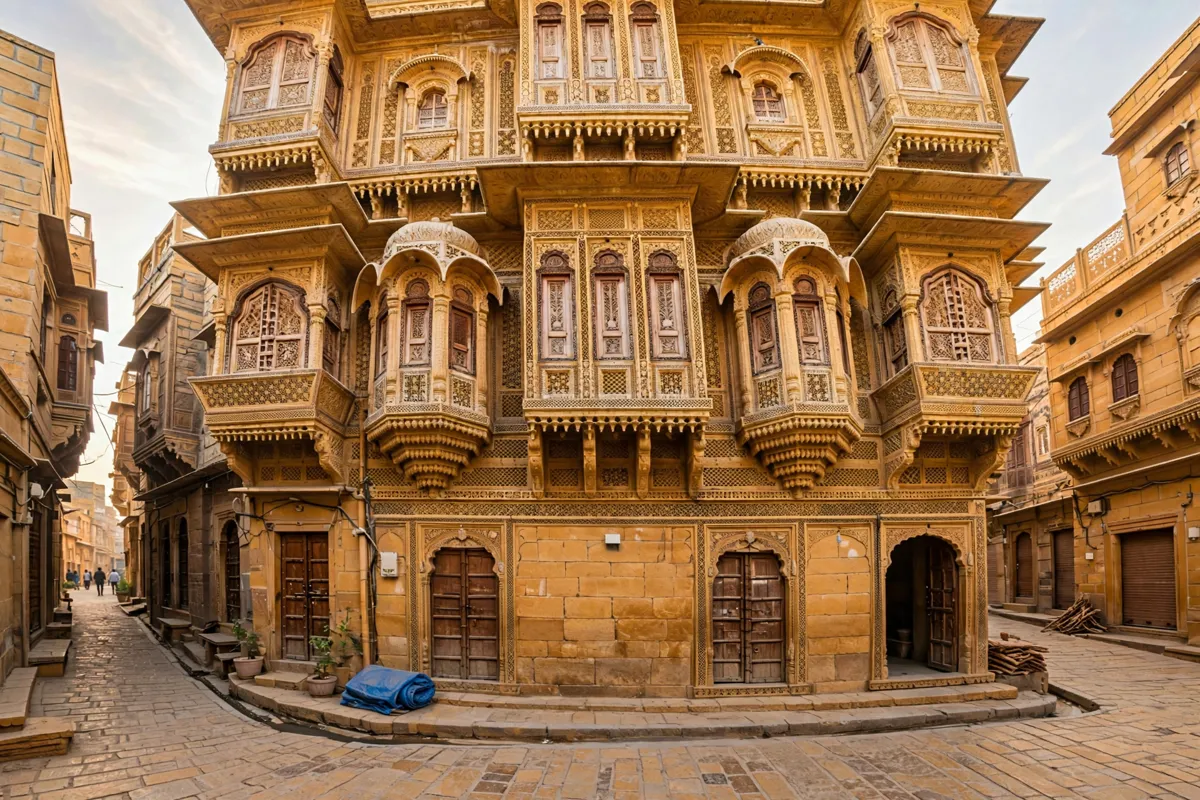
Start with Patwon Ki Haveli
Patwon Ki Haveli is a group of five havelis, and its carved sandstone exterior makes it a strong first stop for an architecture-focused walk. Incredible India gives its opening hours as 09:00–17:00 every day.
The complex stands on a narrow street and rises five storeys. Look at the jharokhas—the projecting balconies—and their latticework, then take in the carved sandstone details across the facade. Inside, high ceilings, carved pillars and mirror work add another layer to the visit. Some interior walls retain paintings and mirror work.
For a broader look at the historic center, you can pair the haveli visit with how to visit Jaisalmer Fort and its Jain temples.
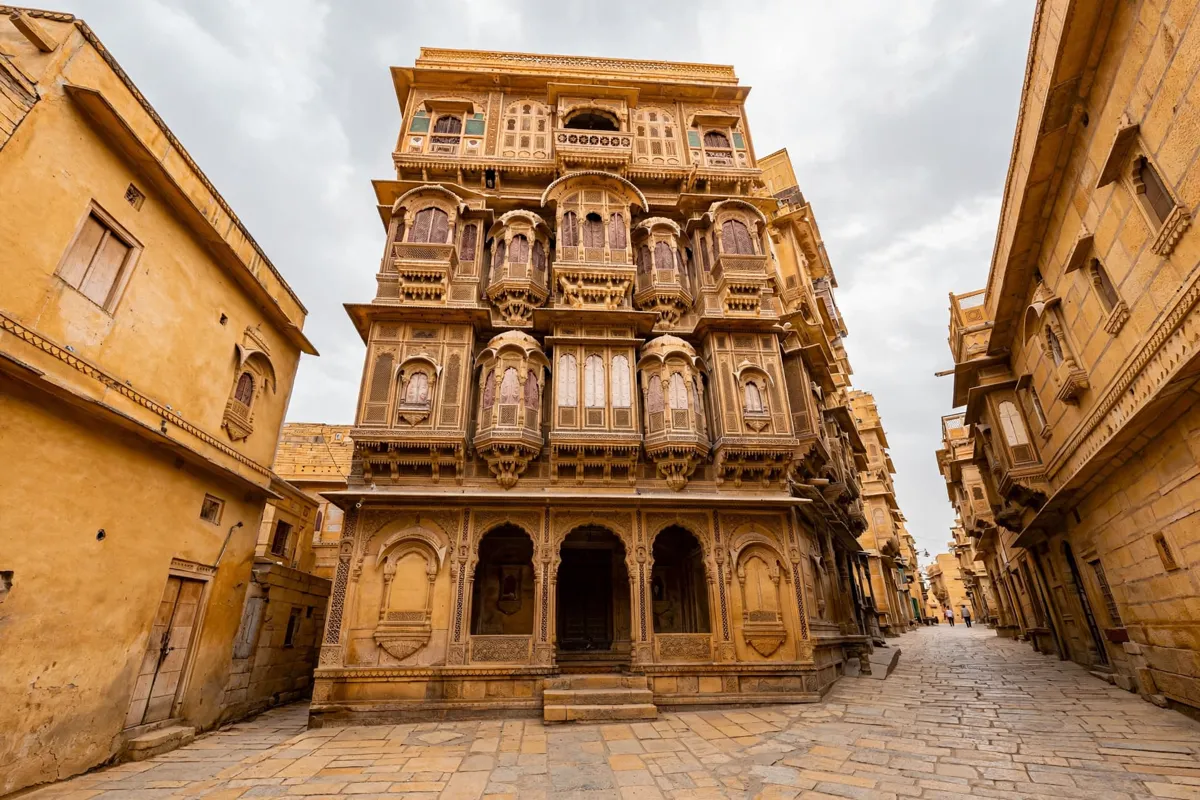
Continue to Nathmal Ki Haveli
Nathmal Ki Haveli stands out for its story of two builders and its detailed yellow-sandstone decoration. The Rajasthan tourism department says two architect brothers built it in the 19th century, working from opposite sides.
Notice the miniature-style paintings and the sandstone tuskers among the decorative details. The haveli is partly inhabited by descendants of Diwan Mohata Nathmal, while another part has been converted into a shop selling souvenirs and local crafts. Its opening hours are 10:00–17:00.
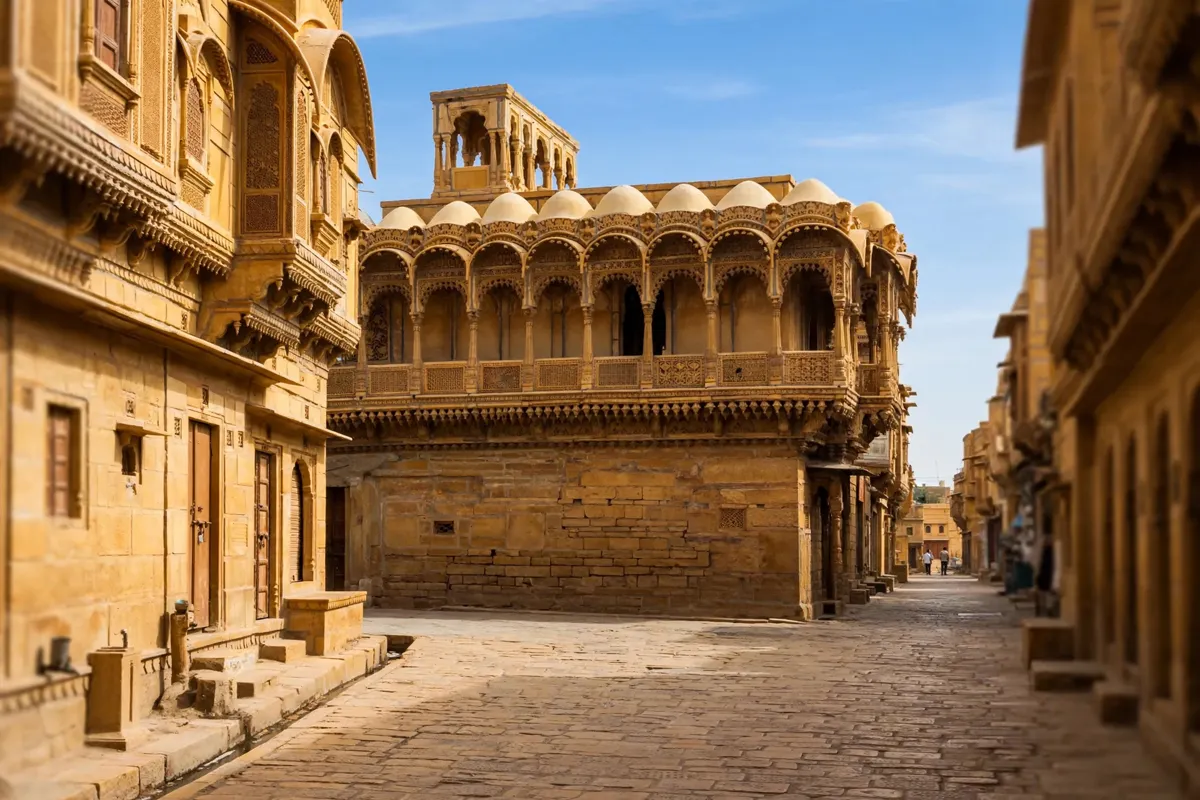
See Salim Singh Ki Haveli
Salim Singh Ki Haveli is known for its high arched roof and carved brackets shaped like peacocks. It dates to the first half of the 18th century, and part of it remains occupied by descendants of its original residents.
Its opening hours are 08:00–18:00. The building’s levels also tell a story of how it was used: the lower floors were plainer and served employees, while the upper levels contained living quarters.
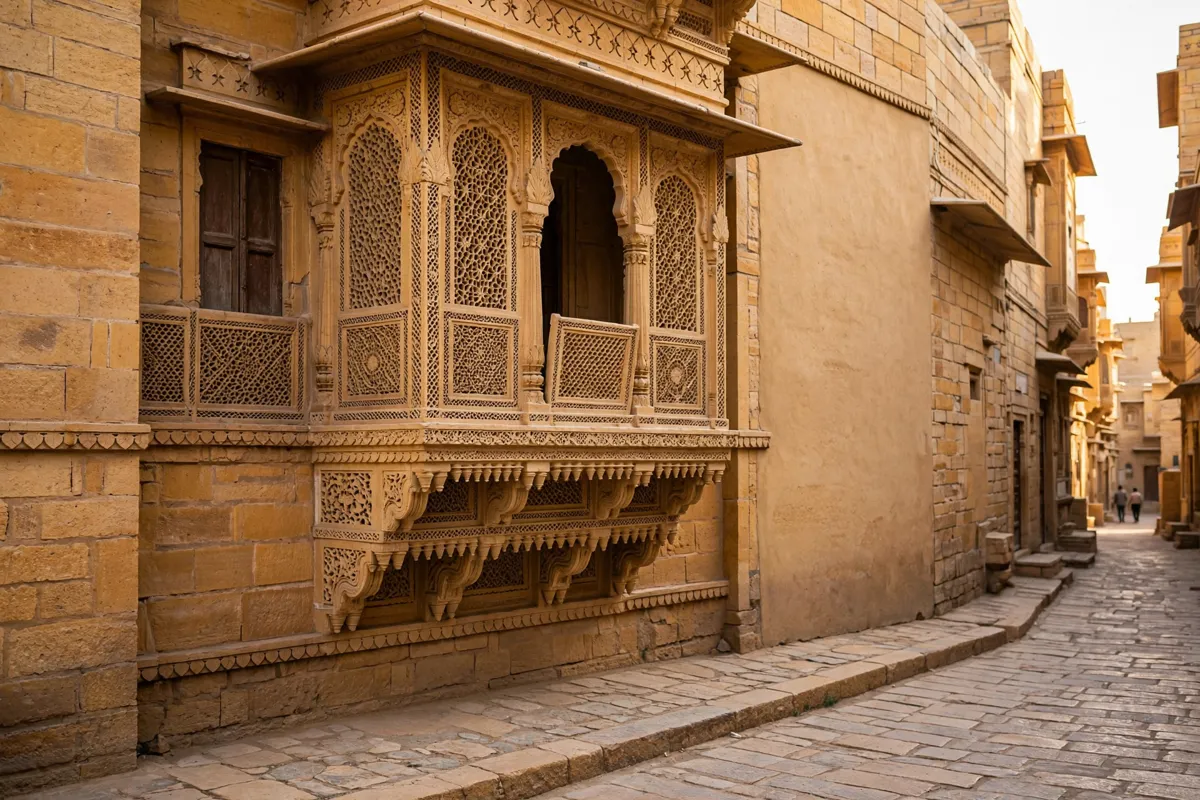
What to notice in Jaisalmer haveli architecture
Jaisalmer haveli architecture rewards a slow look at how stone, pattern and structure work together. Across these three buildings, compare latticework balconies, finely carved sandstone, painted decoration and the different shapes of the rooflines.
Patwon Ki Haveli brings together a group of five buildings, Nathmal Ki Haveli reflects its two-sided construction story, and Salim Singh Ki Haveli draws the eye upward to its arched roof and peacock-shaped brackets. The city’s yellow sandstone provides a common material, but each facade uses it differently.
If you are planning a fuller day in the city, how to fit the fort, havelis and Gadisar Lake into one day gives these landmarks a wider itinerary context.
Check entry and photography rules
Opening hours differ among the three havelis, so plan each stop around its schedule and confirm visitor rules before setting out. Check the official site before you go for current hours and entry or photography rules.
Some parts of Nathmal Ki Haveli and Salim Singh Ki Haveli remain occupied, and Nathmal Ki Haveli also includes a shop. Be mindful of residents and follow any instructions on site. For a change of pace after the architecture stops, how to visit Sadar Bazaar and Manak Chowk covers the city’s market area.
FAQs
Which havelis are included in this Jaisalmer route?
The route focuses on Patwon Ki Haveli, Nathmal Ki Haveli and Salim Singh Ki Haveli.
What is Patwon Ki Haveli known for?
It is a cluster of five havelis with carved sandstone details, including latticework jharokhas.
What makes Nathmal Ki Haveli distinctive?
Two architect brothers built it from opposite sides, and its decoration includes miniature-style paintings and yellow-sandstone tuskers.
What architectural detail stands out at Salim Singh Ki Haveli?
Its high arched roof is supported by carved brackets shaped like peacocks.